If you’ve been told your child has an overbite, an underbite, or a crossbite and you’re not entirely sure what that means or what to do about it, you’re not alone. These terms get used a lot in orthodontic consultations and they’re not always explained clearly.
I’m Dr. Clay Sims, a board-certified orthodontist in Pensacola, Gulf Breeze, and Crestview. Let me explain what each of these bite problems actually is, why some of them matter more than others, and when treatment makes sense.
First: What Is a Malocclusion?
Malocclusion is the clinical term for a bite that doesn’t fit together the way it should. The word literally means “bad bite.” It covers a wide range of conditions, from minor tooth alignment issues to significant jaw discrepancies.
Not all malocclusions are equal. Some are purely cosmetic. They affect how the smile looks but don’t cause functional problems or worsen over time. Others are progressive, meaning they cause damage to teeth, affect jaw development, or become harder to correct the longer they’re left untreated.
Understanding which category your situation falls into is the most important thing an orthodontic evaluation gives you.
Overbite (Deep Bite)
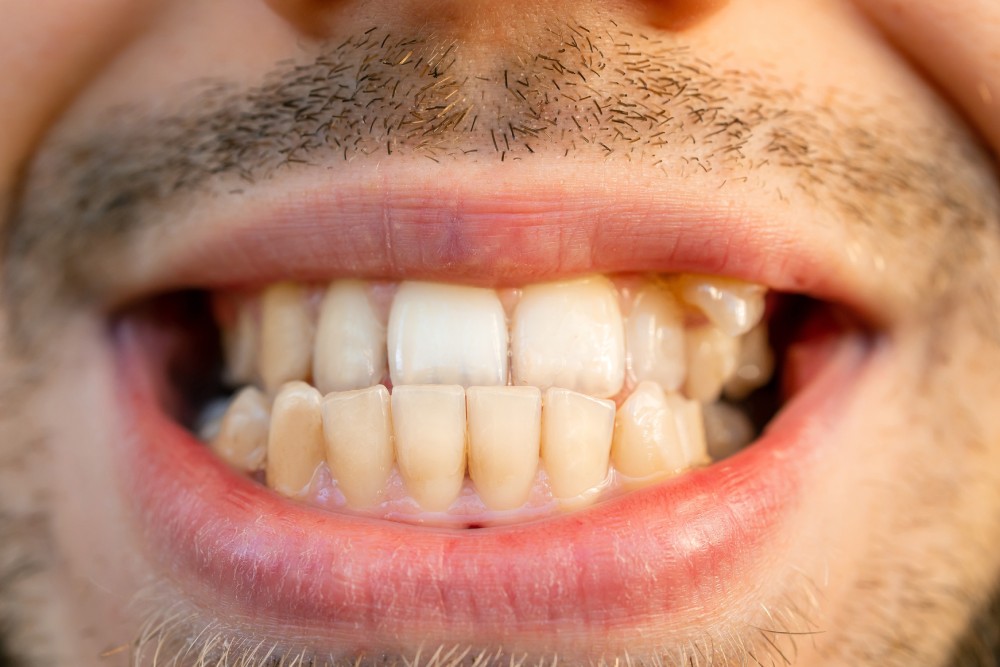
An overbite, sometimes called a deep bite, is when the upper front teeth overlap the lower front teeth vertically more than they should. Some overlap is normal and expected. Most people have some degree of overbite and it’s considered healthy. The issue arises when that overlap is excessive.
In a significant deep bite, the upper front teeth may cover most or even all of the lower front teeth when biting down. In the most severe cases the lower front teeth bite into the roof of the mouth.
What causes it: Deep bites are often related to jaw structure, specifically a lower jaw that is proportionally smaller or positioned further back than ideal. Genetics plays a significant role. Habits like thumb sucking or prolonged pacifier use can contribute in younger children.
Why it matters: A significant deep bite causes the upper front teeth to put pressure on the lower front teeth and the surrounding gum tissue. Over time this causes wear on the lower teeth and can lead to gum recession. The lower jaw is also restricted in how it can move, which can contribute to jaw joint discomfort in some patients.
When to treat: A true deep bite almost always benefits from orthodontic treatment. In children, addressing it during active growth produces better results than waiting until the jaw is fully developed. In adults, treatment is still very effective with braces or Invisalign, though some severe cases may benefit from a surgical approach.
Underbite (Class III)
An underbite is when the lower front teeth sit in front of the upper front teeth. The lower jaw protrudes forward relative to the upper jaw. In a true skeletal underbite the lower jaw itself is larger or positioned further forward than normal.
What causes it: Underbites have a strong genetic component. If one or both parents have a prominent lower jaw, the child may inherit the same jaw pattern. Some underbites develop because the upper jaw grew insufficiently rather than because the lower jaw grew too much.
Why it matters: Underbites don’t improve on their own. In most cases they worsen as the child grows, because the lower jaw continues developing later into adolescence than the upper jaw does. An underbite that’s mild at age 8 can be moderate to severe by age 14 if nothing is done. Left untreated, significant underbites can cause uneven tooth wear, difficulty chewing, speech issues, and in some cases facial asymmetry.
When to treat: This is one of the clearest cases for early intervention. A child with a true underbite should be evaluated by an orthodontist by age 7 at the latest. During the growth years we have options to guide jaw development that aren’t available once the jaw stops growing. If we miss that window, surgery often becomes the only way to fully correct the underlying jaw relationship.
Not every underbite requires phase 1 treatment, but all of them warrant monitoring from an early age so we can act at the right moment.
Crossbite
A crossbite is when upper teeth bite inside lower teeth instead of outside them. Unlike overbite and underbite which are front-to-back problems, a crossbite is primarily a width problem. The upper jaw is narrower than it should be relative to the lower jaw.
There are two types and they’re quite different from each other.
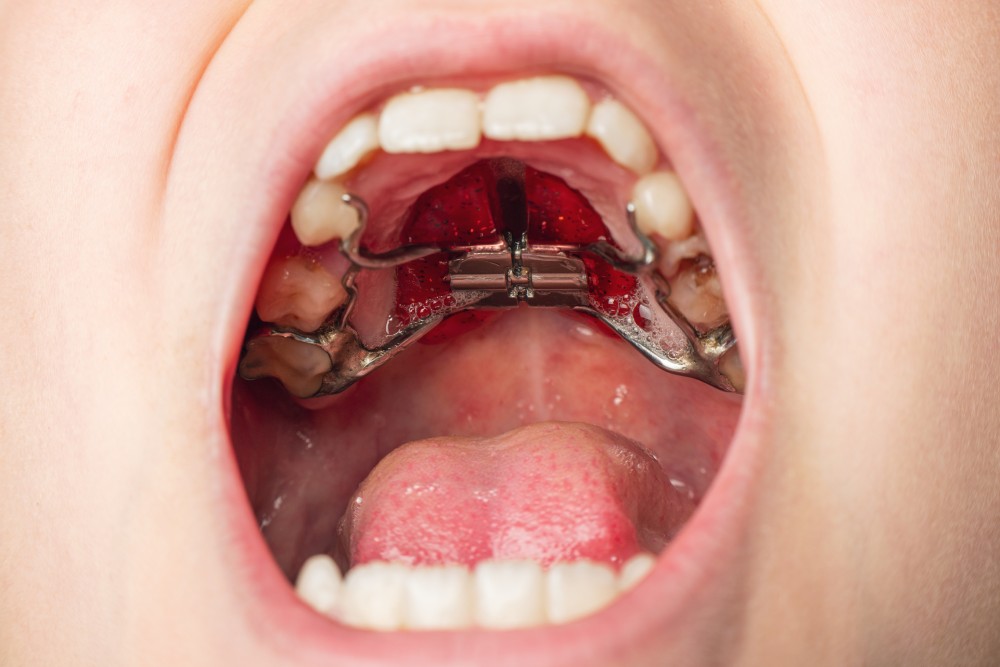
Posterior crossbite involves the back teeth. The upper back teeth bite inside the lower back teeth on one or both sides. When this happens on one side only, the jaw often compensates by shifting toward the crossbite side when biting down. That shift is the detail that makes posterior crossbite particularly important to catch early.
A jaw shift left uncorrected leads to asymmetric jaw growth over time. The lower jaw develops differently on the two sides, which can result in facial asymmetry that is difficult to fully correct once it becomes structural. Correcting a posterior crossbite at age 7 or 8 with a palate expander is straightforward. Trying to address the resulting asymmetry at 14 or 15 is significantly more complicated.
Anterior crossbite involves the front teeth. One or more upper front teeth bite behind the lower front teeth. It looks similar to an underbite but is usually dental rather than skeletal. Specific teeth are in the wrong position rather than the entire jaw being misaligned.
Anterior crossbites cause wear on the edges of the affected teeth and can lead to gum recession on the lower front teeth over time. A simple spring retainer, a short phase of braces, or Invisalign first treatment can correct an anterior crossbite cleanly at a young age. The damage from waiting is cumulative and the correction gets harder as more teeth erupt and the bite becomes more established.
Deep Bite vs. Overbite: Are They the Same Thing?
You’ll hear both terms used and they’re often used interchangeably, but there’s a technical distinction worth knowing.
An overbite refers specifically to the vertical overlap of the front teeth. A deep bite is used to describe a significant overbite where the overlap is excessive. All deep bites are overbites but not all overbites are deep bites. When someone says their child has an overbite and needs treatment, what they usually mean is a deep bite where the overlap has crossed the threshold from normal into problematic.
A different related term is overjet, which refers to how far the upper front teeth protrude horizontally in front of the lower front teeth. You can have significant overjet without much overbite, or significant overbite without much overjet, or both together. These are related but separate measurements.
Open Bite
Worth mentioning alongside the others because parents ask about it regularly. An open bite is when the front teeth don’t touch when the back teeth are closed together. There’s a visible gap between the upper and lower front teeth even with the back teeth in contact.
Open bites are frequently caused by thumb sucking, finger habits, or tongue thrust. The sustained pressure of these habits pushes the front teeth apart and prevents them from erupting into full contact. Correcting the habit before age 9 or so often allows the open bite to self-correct as the jaw grows. After that, correction requires active treatment and is more challenging.
If you notice your child’s front teeth don’t touch when they smile or close their mouth, that’s worth having evaluated.
Crowding and Spacing
Two more common conditions worth understanding.
Crowding is when there isn’t enough room in the jaw for all the teeth to come in properly. Teeth overlap, twist, and stack up. Crowding is the most common reason parents bring children in for an orthodontic evaluation. It’s almost always treatable with braces or Invisalign. In moderate to severe cases we may need to create space through expansion or, less commonly, by extracting teeth.
Spacing is the opposite, gaps between the teeth. Some gaps are normal and close on their own as the adjacent teeth erupt. Persistent gaps can indicate missing teeth, teeth that are too small for the jaw, or habits that are pushing teeth apart. Most spacing issues are very treatable.
How These Are Diagnosed
You can’t diagnose the type or severity of a malocclusion by looking in a mirror. Some crossbites are obvious. Many are subtle. Overbite severity requires measurement. Jaw shift from a posterior crossbite is easy to miss unless you know exactly what to look for.
A proper orthodontic evaluation includes a clinical examination, X-rays, and in many cases a digital 3D scan. Together these give us a complete picture of what’s happening with the teeth, the jaw, and the developing bite.
The American Association of Orthodontists recommends that children have their first evaluation by age 7, when enough permanent teeth have erupted to allow a meaningful assessment of developing bite problems. For children with visible concerns like jaw shifting, front teeth in crossbite, or significant underbite, earlier is better.
Can These Problems Be Treated in Adults?
Yes. Every bite problem described in this post can be treated in adults with braces or Invisalign. The considerations are different than in children because we’re no longer working with a growing jaw, but the treatments are effective.
The main difference is that some problems that could have been addressed with growth modification in a child require different approaches in an adult. A significant underbite or severe skeletal discrepancy in an adult may require a surgical component that wouldn’t have been necessary if it had been caught and managed earlier. Most cases don’t reach that point, but it’s part of why early evaluation matters.
For adults who have lived with a bite problem for years, know that treatment is available and the results can be significant. See our post on adult braces and Invisalign for more on what orthodontic treatment looks like for grown-ups.
Frequently Asked Questions
Is an overbite the same as buck teeth? Not exactly. Buck teeth typically refers to upper front teeth that protrude significantly forward, which is more accurately described as overjet. An overbite refers to vertical overlap. The two often occur together but they’re distinct measurements. Both are treatable with orthodontics.
My child’s dentist said they have a slight overbite. Should I be worried? Some degree of overbite is completely normal. A slight overbite is not a problem. The question is whether the overlap is within the normal range or has crossed into territory that warrants correction. An orthodontic evaluation will tell you which category your child’s situation falls into.
Can an underbite correct itself? No. Underbites don’t self-correct and typically worsen as a child grows. Early evaluation and appropriate timing of treatment is important for underbite cases specifically. If your child’s lower teeth are in front of the upper teeth, schedule an evaluation.
How do I know if my child has a crossbite? Watch your child close their teeth together naturally. If their jaw slides to one side when they bite down, that’s a sign of a posterior crossbite. If one or more upper front teeth sit behind the lower front teeth, that’s an anterior crossbite. Either warrants an evaluation. Some crossbites are subtle enough that only a clinical examination will identify them.
Does fixing a crossbite change facial appearance? It can, particularly in children who have had a jaw shift for several years. Correcting the shift and widening the upper jaw can produce a more symmetric facial appearance as a natural result of restoring proper jaw function. In children treated early, before asymmetric growth has occurred, the facial changes are subtler.
At what age should a crossbite be corrected? As early as it’s identified, if it involves a jaw shift. Posterior crossbites with jaw shift are among the clearest indications for phase 1 treatment because the window for preventing asymmetric jaw development closes with puberty. Anterior crossbites also benefit from early correction to prevent cumulative tooth wear.
Can Invisalign fix an overbite or crossbite? Yes, in most cases. Invisalign has advanced significantly and can treat overbites, crossbites, underbites, and most other bite problems effectively. The right choice between Invisalign and braces depends on the specific case and other factors. See our post on braces vs. Invisalign for a full comparison.
I’ve had these bite issues my whole life and never had treatment. Is it too late? It’s rarely too late. Adults with long-standing bite problems can achieve significant improvement with orthodontic treatment. The approach may differ from treating a child but the results are real. A free consultation will tell you what’s possible for your specific situation.
Schedule your free orthodontic evaluation at Sims Orthodontics
Pensacola, Gulf Breeze, and Crestview. No referral needed. Evaluations start at age 7.
Sims Orthodontics serves families from Pensacola, Gulf Breeze, Crestview, Navarre, Pace, Milton, and across Northwest Florida.