One of the most common things I hear from parents at a first appointment is some version of this: “Our dentist said to wait until all the baby teeth are gone.” And I understand why dentists say that. I really do. But it’s not always the right advice, and for some kids, waiting that long means we miss a window that we can’t get back.
I’m Dr. Clay Sims, a board-certified orthodontist in Pensacola. I grew up in Gulf Breeze, I’ve been practicing here since 2011, and I actually visit dental offices around Pensacola, Crestview, and Gulf Breeze regularly to teach dentists and hygienists what to look for in younger patients. Early treatment is one of the most undertaught topics in dental school, and it’s something I feel strongly about getting right.
So let me answer this question the way I’d answer it if you were sitting across from me at a consultation.
The Short Answer: Age 7
The American Association of Orthodontists recommends that every child have their first orthodontic screening by age 7. That’s the same recommendation I follow at Sims Orthodontics.
Age 7 isn’t arbitrary. By that point, most kids have their first permanent molars coming in and their upper front teeth starting to emerge. That combination gives an orthodontist enough to work with to spot problems that matter, while still leaving plenty of time to do something about them.
That doesn’t mean every 7-year-old needs treatment. Most don’t. But it means an orthodontist can look at what’s happening, tell you if something needs attention now, and keep an eye on development if things are borderline. Coming in at 7 doesn’t commit you to anything. It just makes sure nothing gets missed.
What I’m Actually Looking For at That First Visit
When a 7 or 8-year-old comes in, I’m not just checking if the teeth are straight. I’m evaluating jaw development, bite relationships, growth patterns, and habits. Specifically, here’s what I’m watching for.
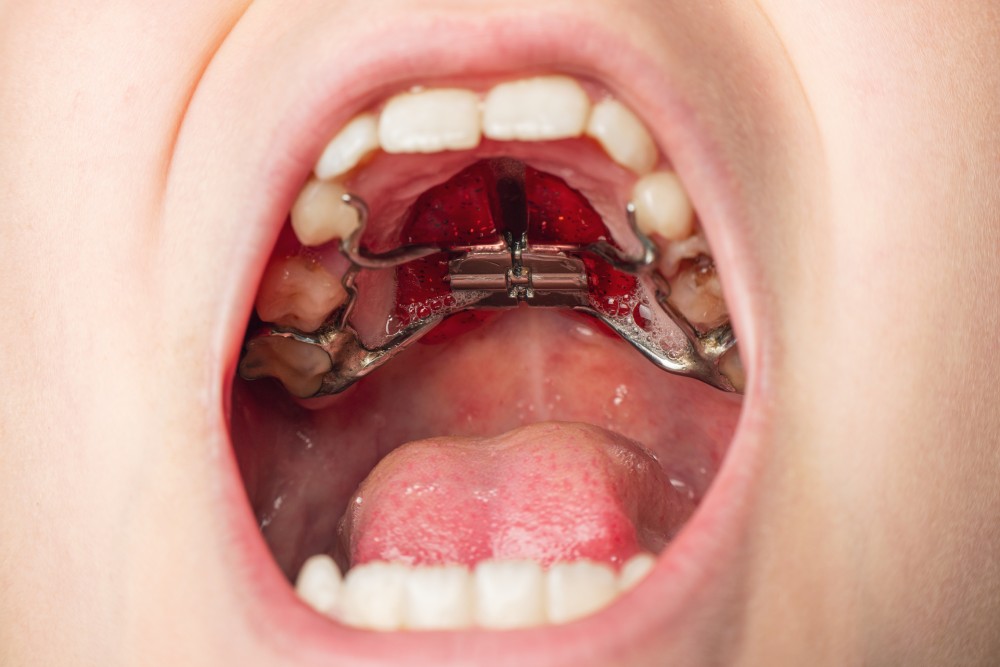
Crossbites. There are two types that matter at this age. A posterior crossbite is when the upper back teeth bite inside the lower back teeth. This often causes a child to shift their jaw to one side when they bite down. Left untreated, that shift can lead to asymmetric jaw growth that becomes very difficult to correct once puberty hits. Catch it at 7 or 8 with a palate expander and we can fix it cleanly. Wait until 12 or 13 and the problem is much harder to address.
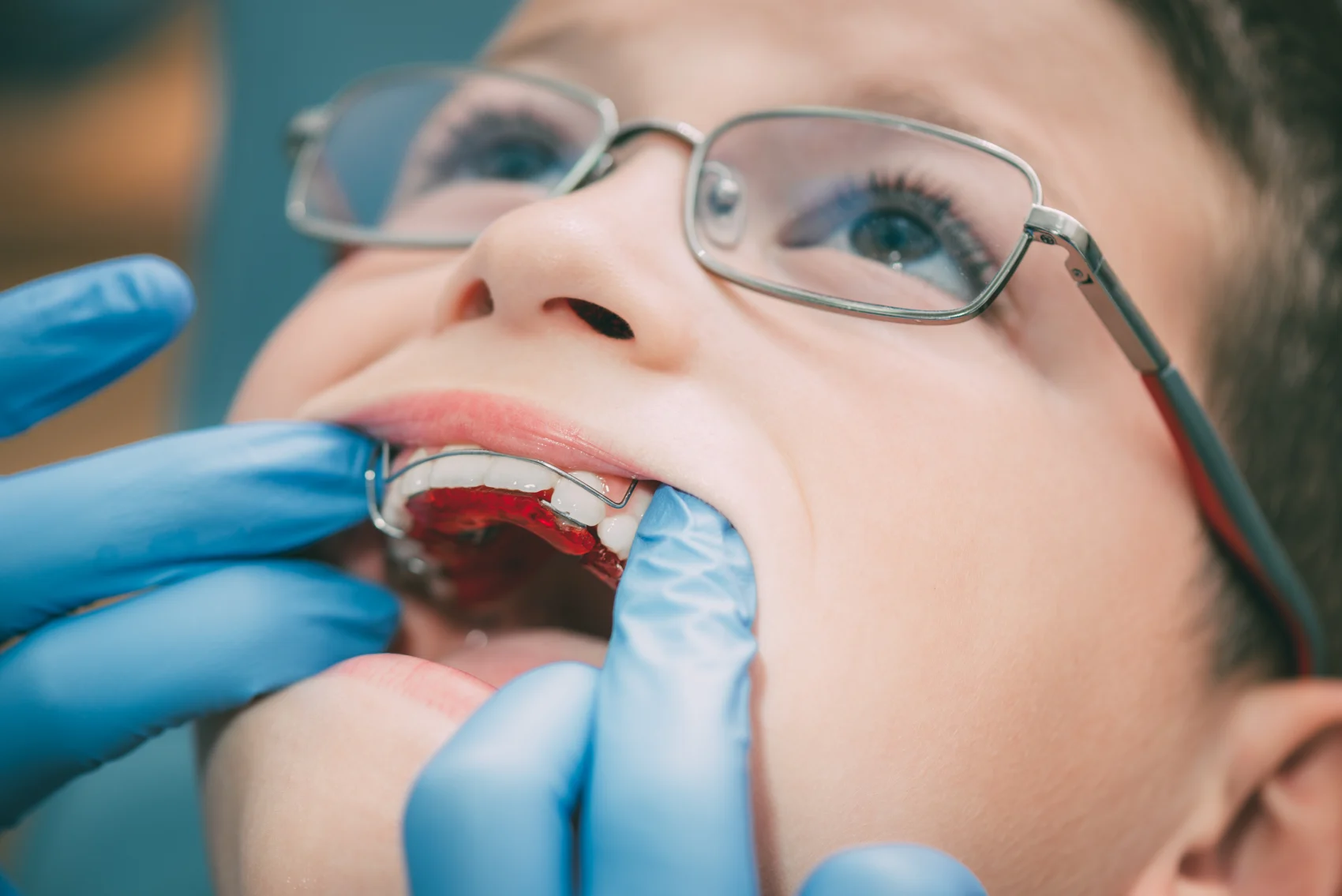
An anterior crossbite is when one or more of the upper front teeth bite behind the lower front teeth. This creates wear on the edges of those teeth and can cause the gum tissue on the lower front teeth to recede over time. In many cases we can correct an anterior crossbite with a simple retainer with a spring, or a short phase of braces or Invisalign. It’s one of those problems that’s minor at 7 and genuinely damaging if ignored for five more years.
Underbites. If the lower jaw is growing faster and farther forward than the upper jaw, that’s something I want to know about early. Class III underbites, if we catch them at the right time, can sometimes be modified with growth guidance. If we don’t, the patient may end up needing jaw surgery as an adult. That’s a very different outcome for the same problem caught at different ages.
Thumb, finger, and tongue habits. If a child is still actively sucking their thumb or finger past age 7 or 8, or if they have a tongue thrust habit, those habits are putting constant pressure on the developing teeth and jaw. The good news is that if we address the habit by around age 9, the dental problems it caused, like an open bite where the front teeth don’t touch, often self-correct as the jaw grows. Wait until 12 and those corrections become much harder and sometimes impossible without more invasive treatment.
Severe crowding and space loss. When baby teeth are lost early, whether from decay, injury, or just falling out ahead of schedule, the neighboring teeth can drift into that space. Over time, the space closes and there’s no longer room for the permanent tooth trying to come in. A simple space maintainer placed early prevents that from happening. Without one, a child who might have had enough room for all their teeth can end up needing permanent teeth extracted to make space for braces. I see this regularly and it’s almost always preventable with early attention.
Missing teeth. Some children are born without certain permanent teeth, most commonly the upper lateral incisors. This isn’t something a parent would know by looking at their child’s smile, but it shows up clearly on X-rays. Knowing early gives us time to plan. We can manage spacing, coordinate with a dentist about implants or bridges down the road, and make sure the final result looks natural and intentional rather than like something we had to work around at the last minute.
Social and confidence issues. This one doesn’t get talked about enough. Most kids don’t develop social self-consciousness about their teeth until middle school, but it can start earlier. If a child is already bothered by how their smile looks, we have the option of doing a limited phase of Invisalign or braces to align the front teeth and give them more confidence going into those years. It’s not always necessary but it’s worth knowing the option exists.
What Happens When Parents Wait Too Long
I want to give you some real examples, without making this feel like a scare tactic, because these are things I actually see in my practice.
A child comes in at 12 or 13. They lost a baby molar early and nobody placed a space maintainer. The permanent premolar that was supposed to go in that spot has no room. We now have two options: try to create space with braces over a very long treatment time, or extract a permanent tooth. Neither is what we would have chosen if we’d caught it at 8.
A child comes in at 13 with a posterior crossbite and a jaw shift. By this point they’re in the middle of a growth spurt and the asymmetry has been building for years. What would have been a straightforward expander case at 7 or 8 is now a much more complicated problem, and in some cases surgery becomes part of the conversation later on.
A 12-year-old comes in with an underbite. The lower jaw has been growing unchecked and the window for growth modification has closed. We manage it as best we can with orthodontics, but the option of avoiding surgery that existed at age 8 or 9 is gone.
I’m not sharing these to alarm anyone. The reality is that the majority of orthodontic problems can still be treated well at 12 or 13 when all the adult teeth are in. That is often the ideal time for full treatment. But there’s a specific set of problems where earlier intervention produces a meaningfully better outcome, and you can only take advantage of that if you know about it in time.
“But Our Dentist Said to Wait”
I hear this regularly and I want to address it honestly.
Your dentist is not wrong that most kids can wait until their adult teeth are in. For a lot of patients that’s completely true. The issue is that dentists don’t get much orthodontic training in dental school, and early treatment orthodontics is especially undertaught. I know this because I went to dental school too, before my orthodontic residency, and I remember how little time we spent on it.
This is actually why I go around to dental offices in Pensacola, Gulf Breeze, and Crestview and offer continuing education to dentists and hygienists on early orthodontic warning signs. It’s not a criticism of general dentists. It’s just a genuine gap in what gets covered, and I’d rather help fill it than let patients fall through the cracks.
Here’s what I tell parents: your dentist may be right that you can wait. But there’s no harm in having an orthodontist check. We offer a free consultation and if everything looks fine I’ll tell you so, put your child in our observation program, and check in every six months at no charge until the timing is right. You don’t need a referral. You don’t need to wait until your dentist sends you. You can just call.
I’d also add this: there are orthodontists out there who will recommend phase 1 treatment on kids who don’t really need it. I understand why some dentists try to protect parents from that. The answer is to find an orthodontist you trust to give you an honest read, not to avoid going altogether.
Our Complimentary Observation Program
If your child comes in for an early evaluation and doesn’t need treatment yet, we don’t send you away with a bill and a follow-up appointment that feels like an obligation. We monitor them at no charge until the right time.
I genuinely don’t want a family to miss the ideal treatment window because coming back felt like it cost something. The observation visits are built into the cost of treatment when we do get started. Until then, they’re free.
This is how we build relationships with families in Pensacola and across Northwest Florida. Some of my current patients are the kids of people I treated when I first opened. That kind of continuity matters to me.
Signs to Watch For at Home
You don’t need to wait until age 7 to call us. If you notice any of these before then, schedule a visit sooner:
- Your child shifts their jaw to one side when they bite down
- Upper front teeth sit behind the lower front teeth
- There are large gaps between teeth or teeth that seem very crowded
- Your child is still actively sucking their thumb or finger past age 5 or 6
- Teeth look like they’re coming in at unusual angles
- Baby teeth fell out much earlier or later than expected
- Your child is self-conscious about their smile
Any of these is a good reason to come in, regardless of age. The consultation is free and there’s no pressure to start treatment if it isn’t needed.
What to Expect at a First Visit
When you bring your child in for their first orthodontic visit at Sims Orthodontics, here’s what happens:
- You meet me personally. Not an assistant, not an associate. Me. Every first visit, every time.
- We do a full clinical examination of the teeth, bite, and jaw
- We take digital records if needed, using 3D scanning technology with no goopy impressions
- I sit down with you and explain exactly what I see, what it means, and what our options are
- If treatment is needed, we go over timing, type of treatment, and cost
- If treatment isn’t needed yet, we talk about what we’re watching and when to come back
No pressure, no upsell, no confusion. You’ll leave knowing exactly where your child stands.
Frequently Asked Questions
What is the best age for a child’s first orthodontist visit? The American Association of Orthodontists recommends age 7, and that’s what we follow at Sims Orthodontics. By this age, enough permanent teeth have come in to allow a proper evaluation of bite, jaw development, and growth patterns.
Does my child need treatment at age 7? Probably not. Most kids who come in at 7 don’t need treatment right away. The goal is to identify the specific problems that benefit from early intervention so we can act during the right window, and monitor everything else until the timing is right.
What is Phase 1 treatment? Phase 1, or early treatment, is orthodontic care done before all the permanent teeth come in, typically between ages 7 and 10. It addresses specific bite, jaw, or space issues that are easier to fix at a younger age. Not every child needs it, but for those who do, it can prevent more complex and costly treatment later.
Does early treatment mean my child will need braces again later? Sometimes, yes. Phase 1 addresses specific early issues but a second phase of treatment after all the permanent teeth come in is still common. We offer a significant discount on Phase 2 treatment for patients who completed Phase 1 with us.
Do I need a referral from our dentist to bring my child in? No. You can call and schedule a free consultation anytime without a referral. Your dentist doesn’t need to send you.
How much does early orthodontic treatment cost? It depends entirely on what’s needed. A simple appliance like a space maintainer or lingual arch can be under $1,000. A more involved Phase 1 case with an expander, braces, and additional appliances for jaw growth or craniofacial issues runs $3,000 to $4,700. Most Phase 1 cases fall somewhere in between. Initial evaluations and observation visits are complimentary. See our full post on braces costs in Pensacola for more detail on pricing and payment options.
Schedule your child’s free consultation at Sims Orthodontics
No referral needed. Three locations in Pensacola, Gulf Breeze, and Crestview.
Sims Orthodontics serves families from Pensacola, Gulf Breeze, Crestview, Navarre, Pace, Milton, and across Northwest Florida.