Taking care of braces isn’t complicated. But it does require more attention than brushing without braces, and the consequences of doing it poorly are real. White spots, cavities, swollen gums, and extended treatment time are all things that happen when hygiene slips during orthodontic treatment.
The good news is that with the right technique and a few specific tools, keeping your braces clean becomes a routine that takes maybe five extra minutes a day. That’s not a big ask for a result that lasts a lifetime.
I’m Dr. Clay Sims, a board-certified orthodontist with offices in Pensacola, Gulf Breeze, and Crestview. Every patient who gets braces at our practice watches a care video at their bonding appointment and goes home with a care pack. We go over hygiene at every single adjustment appointment after that. Here’s everything we cover, in one place.
The Honest Truth About Toothbrushes
Before we get into technique, I want to address something I hear a lot. Patients ask whether they should get an electric toothbrush, which brand is best, whether a specific brush head designed for braces makes a difference.
Here’s my honest answer: a $2 soft toothbrush and a $150 Bluetooth-connected electric toothbrush will produce the exact same results, because a toothbrush is only as good as the person using it.
Technique matters more than equipment. You can have the best electric toothbrush money can buy and still miss the same spots consistently if nobody showed you where to focus. You can have the cheapest manual brush from the drugstore and keep your teeth spotless if you’re using it correctly.
That said, orthodontic brush heads, the ones designed with a V-shaped bristle pattern, do help get around brackets more effectively. And electric brushes can help patients who rush or don’t apply consistent pressure. If you already own a good electric toothbrush, use the orthodontic head. If you don’t, a soft manual toothbrush works perfectly well.
Whatever you use, it has to be soft bristles. Medium and hard bristles damage gum tissue and scratch enamel.
How to Brush with Braces: Technique First
Brush at least twice a day for a minimum of two minutes each time. After meals is ideal. The longer food and sugar sit against the brackets and enamel, the more opportunity bacteria have to produce acid and cause damage.
Here’s the technique that matters:
Angle the brush toward the gumline. Most people brush straight across the teeth horizontally. With braces, you need to angle the bristles at about 45 degrees toward the gum, so the bristles reach underneath the gumline where plaque accumulates. The area between the bracket and the gum is the most commonly missed spot we see at every hygiene check.
Brush above the brackets. Angle the brush down from above, bristles pointing toward the bracket, and brush along the top edge of each bracket.
Brush below the brackets. Then angle up from below, bristles pointing toward the bracket from underneath, and brush along the bottom edge.
Brush the front face of the brackets. A quick pass directly across the brackets themselves removes whatever’s sitting on the surface.
Don’t forget the chewing surfaces and the backs of the teeth. Braces don’t cover these but plaque builds up there the same as always.
The whole process with braces takes two to three minutes when done properly. If you’re done in 45 seconds, you’re not brushing thoroughly enough.
The Spots People Miss Most
After checking hygiene at thousands of adjustment appointments, the spots that get missed most consistently are:
Between the bracket and the gumline. This is the number one area. When you brush horizontally across your teeth you’re cleaning the face of the bracket but the bristles aren’t reaching the triangle of tooth surface between the bottom of the bracket and the gum. This is where plaque builds up, where white spots start, and where gingivitis develops during treatment. Angle the brush up from below the bracket and you’ll hit this spot.
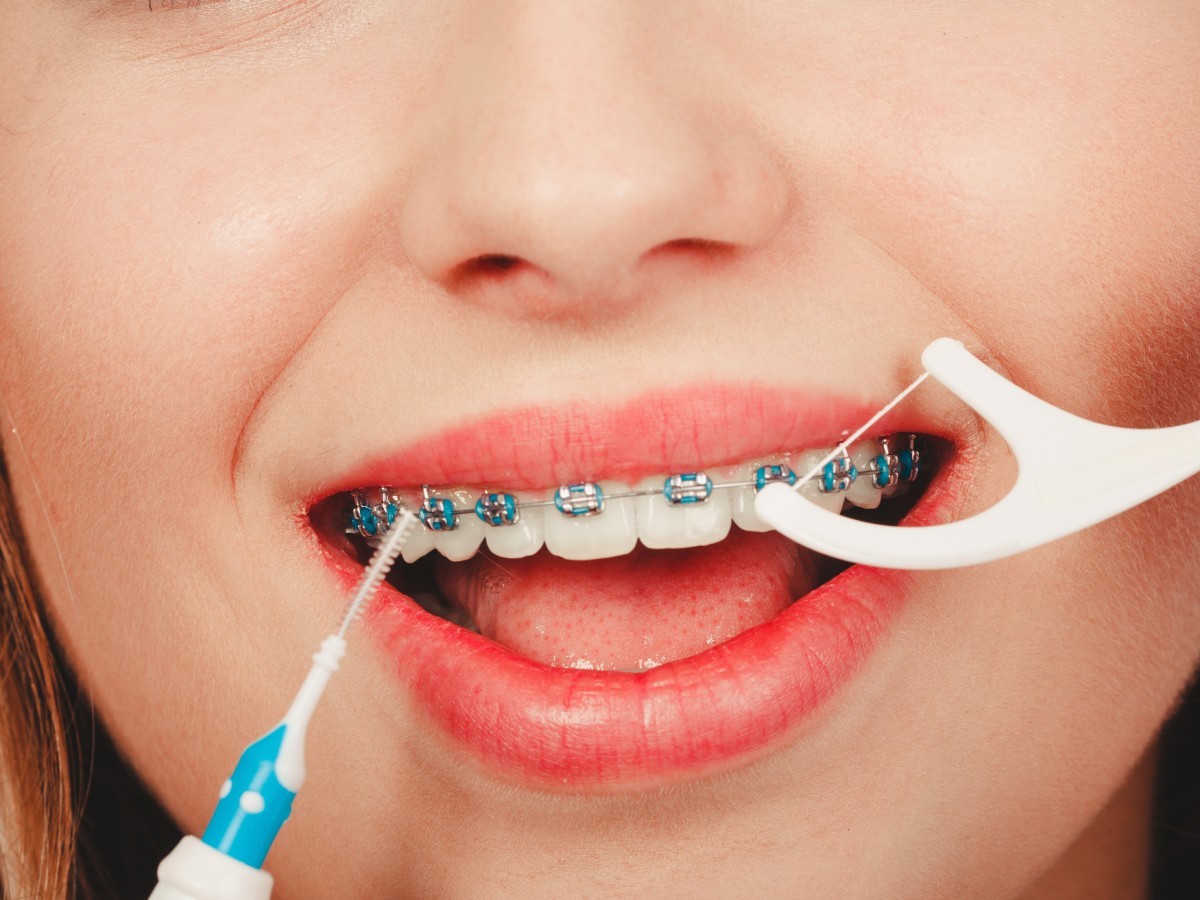
Between brackets on adjacent teeth. The wire runs between brackets and there’s a small gap between each one where food and plaque can accumulate. Flossing is the only way to reach here, which is why flossing matters more with braces than without.
Behind the back molars. Easy to forget, never changes with or without braces.
Flossing with Braces: Why It’s Worth It
Flossing with traditional floss and braces is genuinely time-consuming because you have to thread the floss under the wire between each pair of teeth. Most patients do it once and decide it takes too long.
This is why we started recommending Platypus Orthodontic Flossers. You can find them on Amazon and they’re specifically designed to slide under the orthodontic wire without threading. The flat pick portion fits between the wire and the tooth so you can floss all the way down into the contact between teeth in a fraction of the time. We recommend these to every patient because the best flosser is the one you’ll actually use.
Traditional floss threaders work too and we provide them in your care pack. If you prefer using regular floss, threaders make it manageable. The process is slower but the result is the same.
Whatever method you choose, try to floss at least once a day. Skipping flossing entirely for months creates the kind of gum inflammation and buildup that slows treatment and causes problems you’ll need your dentist to address.
Water Flossers: Helpful but Not a Replacement
Water flossers like the Waterpik are genuinely useful during orthodontic treatment. The pressurized stream of water gets into the spaces around brackets and wires that are hard to reach with a brush and dislodges food particles effectively.
What a water flosser does not do is remove plaque from between the teeth the way flossing does. Plaque is sticky and adheres to tooth surfaces. Water alone doesn’t break that adhesion the way mechanical flossing does.
Think of a water flosser as a supplement, not a substitute. If you have one, use it. It makes the whole process faster and more thorough. Just don’t skip flossing because you used the water flosser.
What We Give You When You Get Braces
Every patient at Sims Orthodontics goes home after their bonding appointment with a care pack that includes a travel bag, a toothbrush, floss threaders, and orthodontic wax. Before you leave the office you watch a care video that covers brushing technique, flossing, foods to avoid, and what to do if something breaks.
We also go over hygiene at every adjustment appointment. We grade your hygiene at each visit, excellent, fair, or poor, and we have a direct conversation if something needs to improve. We’re not doing that to embarrass anyone. We do it because catching a problem early is always better than seeing it after the braces come off when nothing can be done about it.
For more on what happens at adjustment appointments and how we monitor progress, see our post on what to expect at your first orthodontist appointment.
Diet and Hygiene Work Together
You can brush and floss perfectly and still develop white spots if your diet is working against you. The most common culprit is sugary drinks. Soda, sweet tea, Gatorade, and sports drinks create an acidic environment in the mouth that demineralizes enamel around brackets even when brushing is consistent.
Water is the only drink that actively helps your teeth during treatment. Everything else should be limited and followed immediately by rinsing or brushing.
For the full breakdown of what to eat and drink during treatment, see our complete guide on foods to eat and avoid with braces. And for more on white spots specifically, including how they form and how to prevent them, see our post on white spots after braces.
Orthodontic Wax: Your Emergency Tool
Every care pack includes orthodontic wax and you should keep it somewhere you can find it easily. When a wire end is poking, when a bracket edge is rubbing against your cheek, when anything is causing irritation, wax is the immediate fix.
Pinch off a small piece, roll it into a ball, and press it firmly over the sharp or irritating area. It creates a smooth barrier between the metal and your soft tissue. It’s not a permanent fix but it makes things comfortable until you can call us.
If wax isn’t solving the problem and you’re in significant discomfort, call the office. We’ll get you in and take care of it.
Retainer Care After Treatment
Once the braces come off you’ll be wearing a retainer, and retainer care matters just as much as braces care. A retainer that isn’t cleaned regularly builds up bacteria and calculus, causes bad breath, and can harbor the same bacteria that cause cavities.
Rinse your retainer every time you take it out. Clean it gently with a soft toothbrush and water or a non-abrasive retainer cleaning product. Don’t use toothpaste directly on clear retainers because it’s mildly abrasive and can scratch the surface over time, making it cloudier and harder to keep clean.
Store your retainer in its case when you’re not wearing it. Not in a napkin at a restaurant. Not loose in a backpack. In its case. The number one reason patients lose retainers is setting them on a tray or wrapping them in a napkin and accidentally throwing them away.
For more on retainers and how our Peace of Mind Retainer Plan protects your result long term, see our post on adult braces and Invisalign in Pensacola.
Frequently Asked Questions
How often should I brush with braces? At minimum twice a day, but after every meal is ideal. The longer food and sugar sit against your brackets, the more risk you have of developing white spots or cavities. If you can’t brush after every meal, rinse thoroughly with water.
Can I use an electric toothbrush with braces? Yes. Electric toothbrushes work well with braces. Use a soft brush head, and if your toothbrush brand makes an orthodontic head with a V-shaped bristle pattern, that’s worth using. The most important thing regardless of brush type is technique and consistency.
What is the best way to floss with braces? We recommend Platypus Orthodontic Flossers, available on Amazon, because they slide under the wire without threading and make flossing fast enough that people actually do it. Traditional floss with a floss threader works just as well if you prefer it. A water flosser is a good supplement but doesn’t replace flossing.
How do I know if I’m brushing well enough? We check and grade your hygiene at every appointment. If you’re doing well we’ll tell you. If you’re missing spots we’ll show you exactly where and how to fix it. Disclosing tablets, available at most pharmacies, temporarily stain plaque and show you exactly where you’re missing when you brush.
What should I do if a wire is poking me? Use orthodontic wax to cover the sharp end immediately. Press a small piece firmly over the poking area. If wax isn’t resolving the discomfort, call our office and we’ll get you in. Don’t try to cut the wire yourself.
Does brushing with braces hurt? Brushing itself doesn’t hurt. For the first few days after getting braces on and after each adjustment appointment, your teeth will be sore and even gentle brushing can feel uncomfortable. Use a softer touch during those days. Skipping brushing because it’s tender is one of the most common reasons hygiene slips early in treatment.
How do I clean my retainer? Rinse it every time you remove it. Clean with a soft toothbrush and water. Avoid toothpaste on clear retainers as it scratches the surface. Keep it in its case when not in your mouth. If your retainer starts to look cloudy or smell, a retainer cleaning tablet dissolved in water works well for a deeper clean.
Book your free consultation at Sims Orthodontics
No referral needed. Pensacola, Gulf Breeze, and Crestview.
Sims Orthodontics serves families from Pensacola, Gulf Breeze, Crestview, Navarre, Pace, Milton, and across Northwest Florida.