There’s a conversation happening in dentistry and orthodontics right now that most patients don’t know about. Large corporate companies have been buying up private practices across the country at a rapid pace. It’s happening in Pensacola. It’s happened in Crestview. And it’s worth understanding what that means for you as a patient before you choose where to get your treatment.
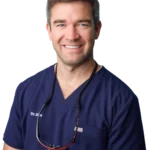
I’m Dr. Clay Sims. I own and operate Sims Orthodontics with three locations in Pensacola, Gulf Breeze, and Crestview. I’m not going to pretend I’m a neutral party on this topic because I’m not. But I do have friends who work in corporate orthodontic settings, colleagues who have sold their practices to corporate groups, and fifteen years of watching how this plays out for patients. So I’ll give you my honest take and let you make your own call.
What Is a Corporate Orthodontic Practice?
A corporate orthodontic practice, sometimes called a DSO or Dental Service Organization, is a practice that is owned and managed by a business entity rather than by the treating doctor. The orthodontist works there as an employee or contractor. The business decisions, from staffing to scheduling to how treatment is structured, are made by people who are often not clinicians and who may be based in another city entirely.
This model has grown significantly over the last decade. Private equity has moved into dentistry and orthodontics the same way it moved into pharmacies, urgent care clinics, and other healthcare fields. You’ve seen what happened when corporations started buying up local pharmacies. The neighborhood pharmacy your family used for years gets absorbed, the staff changes, the personal relationship disappears, and eventually it feels like any other chain.
I watched that happen with a pharmacy my family had a connection to in Gulf Breeze. The same thing is happening in orthodontics, and the stakes are actually higher because orthodontic treatment is a 12 to 24 month relationship, not a one-time transaction.
What This Means for You as a Patient
You may not see the same doctor twice.
Corporate practices often employ multiple associate orthodontists, sometimes four or five at a single location. These are typically young doctors fresh out of residency carrying significant student debt. They sign three to five year contracts, gain experience, and then leave to start their own practices or move on. The turnover is real and it’s built into the model.
What that means for you is that the doctor who starts your treatment may not be the doctor who finishes it. The doctor who sees you at your six-month adjustment may never have seen your records before. Treatment plans get handed off. Decisions get revisited. Continuity of care suffers.
At Sims Orthodontics, you see me at every appointment. Same doctor, start to finish, every single time. My team travels between all three locations and we use the same software at every office so your records are always current and complete. I know your case because I’ve been managing it the whole time.
You may not even meet the doctor at your first appointment.
One of the most common complaints I hear about corporate orthodontic offices, and you can read this in their own Google reviews, is that patients went to their initial consultation and never met the orthodontist. A treatment coordinator presented the case and the plan. The doctor may have glanced at records in the back.
At our practice, you meet me personally at every first appointment. That’s not negotiable. I do the examination, I review your records, I explain what I see and what I recommend. You are making a decision about 12 to 24 months of treatment and thousands of dollars. You should be talking to the doctor.
Business decisions get made by people who don’t know your community.
One of the things I hear most from friends practicing in corporate settings is that someone from a corporate office in Atlanta or Dallas tells them how to run their practice. How many patients to schedule per hour. What products to use. How to structure their treatment plans. These are business people, not orthodontists, and they don’t know Pensacola. They don’t know Gulf Breeze. They don’t know what matters to families here.
I grew up here. I went to Gulf Breeze High. I treat the kids of people I went to school with. My investment in this community is personal, not contractual. When I make decisions about how to run this practice, I’m thinking about the patients I’ve known for years and the families I’ll be serving for years to come.
Our Crestview office is a good example of why this matters locally. As of right now, Sims Orthodontics is the only owner-doctor orthodontic practice in Crestview. The other orthodontic options in town are either corporate owned or run by a dentist who is not a board-certified orthodontist. That distinction is worth understanding before you choose where to take your family for treatment that will last 12 to 24 months.
Treatment quality and consistency can suffer.
Orthodontics is fundamentally different from most dental procedures. A crown takes a few weeks. A filling is done in one visit. Orthodontic treatment runs 12 to 24 months, sometimes longer. The relationship between doctor and patient matters enormously over that time. When the doctor changes mid-treatment, when the treatment plan gets adjusted by someone who didn’t design it, when nobody in the office has a long-term investment in your outcome, the result can suffer.
I’m not saying corporate orthodontists are bad doctors. Many of them are talented clinicians doing the best they can within a system that isn’t set up for the kind of continuity orthodontics requires. The problem isn’t the individuals. It’s the model.
Why Doctor-Owned Practices Are Different
When an orthodontist owns the practice they work in, everything changes.
I treat every patient like I would treat my own family. That’s not marketing language, it’s how I actually think about it. When I’m planning a case, the question I ask myself is: if this were my child, my parent, my sibling sitting in this chair, what would I recommend? That standard guides every treatment decision I make.
I also have complete accountability for outcomes. If something goes wrong, if treatment isn’t progressing the way it should, if a patient is unhappy, that comes back to me. There’s no corporate layer to absorb complaints or redirect responsibility. It’s my name on the door and my reputation in this community. That accountability matters.
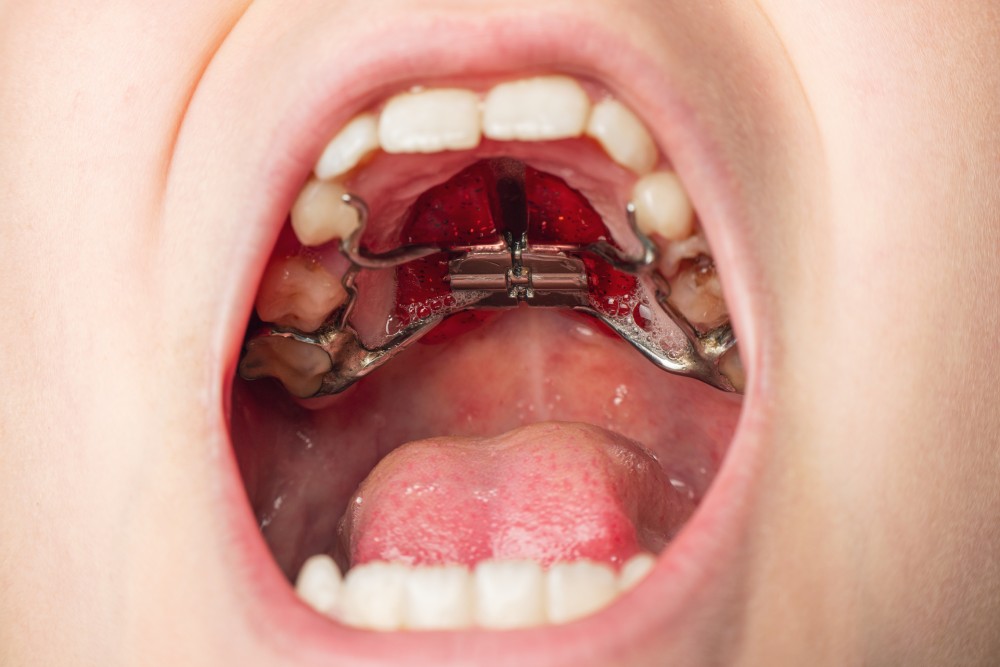
And because I’m not an associate waiting out a contract, I have a long-term relationship with my patients. Some of my current patients are the children of people I treated when I first opened. I’ve seen families grow. I’ve watched kids I put in phase 1 expanders come back at 12 for their full treatment. That continuity is something you simply can’t get in a high-turnover corporate setting.
A Few Things Worth Checking Before You Choose Any Orthodontist
Whether you’re considering our practice or somewhere else, here are the questions worth asking:
Will I see the same orthodontist at every appointment? If the answer is “usually” or “it depends on the schedule,” that tells you something.
Will I meet the orthodontist at my first consultation? If a treatment coordinator handles the whole first visit without the doctor present, ask why.
Is the orthodontist board certified? Board certification requires passing a rigorous examination process beyond just completing a residency. Only about one in three orthodontists holds this designation. Dr. Sims is board certified.
How long has the doctor been at this practice? High turnover is a red flag in orthodontics specifically because treatment spans years.
Read the reviews carefully. Not just the star rating. Read what people actually say. The patterns that show up in negative reviews of corporate practices are consistent: feeling rushed, seeing different doctors, feeling like a number. Those reviews are patients telling you something important.
What I Give Back to This Community
One more thing worth saying, not to pat myself on the back but because it speaks to what doctor-ownership means in practice.
I didn’t grow up in a family of businesspeople. My great-grandfather was a rural Alabama doctor who rode out on horseback to treat neighbors, and when families couldn’t pay he left money on their tables instead of taking it. My grandfather Max ran Bokas and Jordan Pharmacy in Gulf Breeze, the only drugstore between Pensacola and Fort Walton Beach for years. He knew every customer by name, ran charge accounts for families who couldn’t pay right away, and when someone was too sick to come inside he’d walk out to their car himself. If a doctor called at midnight, he’d drive to the store, unlock it, and fill the prescription. He did it hundreds of times. Never for credit. Just because it was needed.
My mom Sharon was named Gulf Breeze Citizen of the Year. After Hurricane Ivan in 2004, with no electricity and no open pharmacies, she filled a prescription by hand on a manual typewriter by flashlight for a storm-injured child a local ER sent to their door. They gave it to the family free of charge.
None of them made a show of it. They just showed up.
I didn’t inherit a building or a business. I inherited a way of practicing. That’s the thread that runs through everything we do at Sims Orthodontics, and it’s genuinely not something a corporate organization can replicate because it doesn’t come from a policy manual. It comes from watching the people who raised you.
Every year for the past 12 years we’ve run our Teacher Wish List program. Our patients nominate their teachers, we select 10 classrooms a year, and we fulfill their classroom wish lists out of pocket. It started in Crestview and has grown from there. We’ve put more than $50,000 back into local classrooms through this program alone. On top of that we regularly sponsor our patients’ sports teams and school events throughout the year because these are our neighbors and their kids are our patients.
I also work with the ARC Gateway, have done Give Kids a Smile events and MERCY clinics locally, and have traveled to the Dominican Republic and Peru on dental mission trips. I’m part of the craniofacial and cleft palate team at Sacred Heart, treating some of our most complex young patients, sometimes at reduced cost or no cost at all.
I also have a personal connection to this work that goes beyond orthodontics. My stepson Preston has Prader-Willi syndrome, which has deepened my commitment to serving patients with special needs and complex medical situations with the same care and dignity as anyone else.
None of this happens when a corporate entity owns a practice. The profit goes to shareholders, not back into the community that generated it.
The Pensacola community has recognized the difference. Sims Orthodontics has been named Best Orthodontist by Best of the Bay readers and VIP Magazine repeatedly since 2013, winning or finishing as a top finalist almost every single year across both publications, plus Best on Coast recognition consistently since 2018. Those aren’t awards we applied for. They’re votes from the people we treat. That kind of sustained recognition over more than a decade reflects something real about how a practice is run and how patients feel when they leave.
Frequently Asked Questions
What is a DSO in orthodontics? A DSO, or Dental Service Organization, is a corporate entity that owns and manages dental or orthodontic practices. The treating doctor works as an employee or contractor rather than as the practice owner. Business decisions are typically made by non-clinicians at a corporate level.
Is corporate orthodontics bad? Not necessarily bad, but structurally different in ways that matter for patients. High doctor turnover, less continuity of care, and business decisions made by non-clinicians are common characteristics. For a short dental procedure it may matter less. For a 12 to 24 month orthodontic relationship it matters quite a bit.
How do I know if an orthodontic practice is corporate or privately owned? You can ask directly. You can also look at how many orthodontists are listed on the practice website, whether the same doctor appears consistently in reviews, and whether the practice is part of a larger network or brand. Reading Google reviews carefully often reveals the answer.
Does being out-of-network with my insurance mean I should go to a corporate practice? Not necessarily. Orthodontic insurance typically pays the same lifetime maximum benefit regardless of whether your provider is in-network or out-of-network. You can choose a private, doctor-owned practice and still use your full insurance benefit in most cases. We check your benefits for free at your first appointment.
Does Dr. Sims see patients at all three locations? Yes. I personally treat patients at our Pensacola, Gulf Breeze, and Crestview offices. My team travels with me across locations and every patient’s records are current at every office through our practice management system.
How do I get started at Sims Orthodontics? Call or book online for a free consultation at any of our three locations. No referral needed. You’ll meet me at your first appointment, we’ll go over your records and options, and you’ll leave with a clear picture of what treatment looks like and what it costs.
Book your free consultation at Sims Orthodontics
Pensacola. Gulf Breeze. Crestview. Same doctor at every visit.
Sims Orthodontics serves families from Pensacola, Gulf Breeze, Crestview, Navarre, Pace, Milton, and across Northwest Florida.